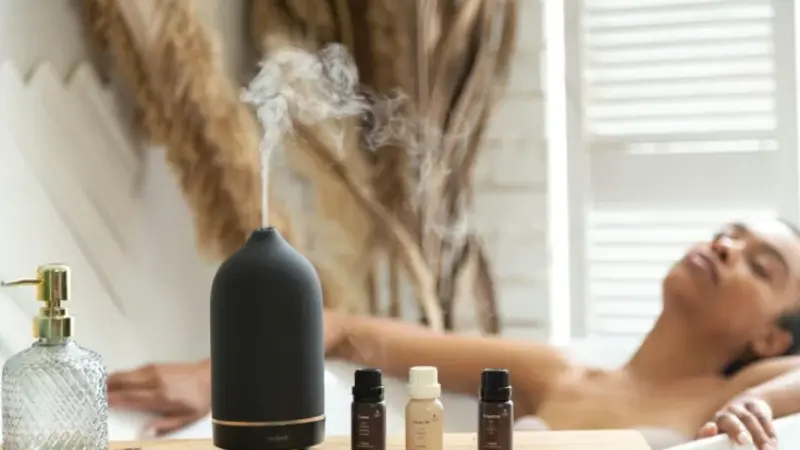
Essential oils have likely been everywhere that you look. Small bottles. Aromatic scents. Big promises. There are those who relax using them at night. Some have them on their desks to alleviate stress on any long day. The issue is straightforward, and the answer lies within many. Do these perfumes have a measurable impact on your mental health? Or are they rather a comfort ritual? It is here that the sincere examination of what research has known to date.
I would like to begin with a short story. Once I had the lavender roller in my automobile because of a season that was rough. The smell was not the solution to my problems. It was able to make me stop and pause. It was that stop that alone served to make me feel more grounded. Innocuous things are like breath sometimes. That is the reason why aromatherapy is a category for many people. And this is what we will deconstruct realistically.
How Aromatherapy Works
Aromatherapy is a technique involving the variation of the feelings that you experience. Your brain’s responsiveness is quick when you inhale these perfumes. The signals transmitted by the olfactory system go to the limbic region, which processes feelings, memory, and even stress. It is based on this process that you will be in a relaxed state when a scent reminds you of a nice place. The researchers followed three obvious effects.
Anxiety Relief
There are scents that reduce stress indicators. Lavender demonstrates the most support in literature. It is commonly used in sleep potions and relaxing sprays. When consumed by breath, the bodies of the people become relaxed to some extent. Heart rate slows. Muscles let go. You feel a small shift.
Mood Support
Citrus oils such as lemon, orange are brighter. They are productive in the morning hours or during a midday slump. This impact is moderate and detectable in most of the controlled trials.
Relaxation and Sleep
You already know the ritual. Dim lights. Slow breath. A diffuser in the corner of the room. The aroma preconditions the relaxation of your body. This is best when you combine the smell with a regular, encouraging wind down schedule.
When you are living with chronic stress or getting back to normal after an addiction, you may be requiring more formal assistance. The Idaho Addiction Treatment is the basis of what professional support should offer, and simple aids such as aromatherapy will be adding comfort.
What the Research Says So Far?
Aromatherapy is investigated by means of controlled experiments by scientists. Some results are strong. Others stay mixed. This is because what you personally prefer will depend on your level of stress, tastes, and the frequency of using the oils.
A Look at Anxiety Studies
Most of the trials indicate beginning with lavender reduces short-term anxiety. Before medical procedures, hospitals utilize it. It is used by dentists on nervous patients. You see a clear pattern. When individuals inhale lavender, they relax prior to any stressful situation.
One example stands out. Volunteers who smelled of lavender in the process of viewing a stressful task registered a lower score in anxiety as compared to the control group that had no scent. This was a small but consistent effect.
Evidence on Mood Regulation
Citrus scents are conducive to mood when taken in short sessions. You feel more alert. You feel a bit more positive. These oils have no effects in treating depression. They are used in maintaining the mood on a daily basis.
Evidence on Relaxation and Sleep
Lavender, chamomile, and bergamot have the most significant effects. You fall asleep faster. Sleep feels deeper. This transition is most effective in addition to the good sleep routines.
Organised detox and recovery programs usually prescribe the calming of nighttime habits. Fresno Drug and Alcohol Detox promotes grounding tools to assist the clients in creating more constant habits. Here, aromatherapy is an appropriate gentle supplement.
The Areas Where Aromatherapy Is the Most Helpful
Aromatherapy excels in three areas of practice. These do not require a lot of money or alteration in routine to begin.
Stressful Moments
Imagine a tight schedule or an hour of commuting. Fast sniffing of Lavender or bergamot leaves your brain at rest. That is when you have time to respond as opposed to react.
Creating Rituals on a Day-to-Day Basis
Scents work like cues. When every night you sniff the same combination it becomes a pattern to the brain. You begin to relax faster. The custom becomes a home back to serenity.
Promoting Other Mental Health Resources
Aromatherapy is an aiding tool in case you attend counseling or use medication or a recovery plan. Smell is not a cure-all in abiding emotions. It assists you in taking your nerves to keep with you when working hard.
Aromatherapy is deficient in the following
Aromatherapy makes you feel better. Mental health treatment is not substituted by it. This gap matters.
It needs no clinical depression therapy
Researchers remain true to this point. Essential oils alleviate an emotional shift in the short term. They fail to correct underlying clinical disorders.
It does not replace therapy
Trauma, dependency, and chronic anxiety require university assistance. Aromatherapy adds comfort. It fails to deal with fundamental causes.
It does not work the same way with everyone
There is a distinctive transition for some people. Others feel nothing at all. This will be determined by your brain chemistry and your own linkages with each scent. Aromatherapy is not a cure, it is a tool to help you.
The Safety of Aromatherapy
You want simple steps. Here they are.
Choose Quality Oils
Protect synthetic fillers Check essential oils that are pure without any additives. Brands vary. Do not buy the total set until you are sure you will use small bottles.
Use a Diffuser
Scent is spread evenly by the diffusers, using water. A few drops are enough. You do not require intense intensity. You desire a mild smell in the background.
Try Topical Use with Care
Then mix oils with a carrier oil such as jojoba or coconut. This must be tested on a small part of the skin. Certain oils cause irritation of the skin.
Associate Scents with the Willful Customs
Use lavender at night. Use citrus in the morning. Have some peppermint in your work bag when having a long meeting. The effect is greater with the more regular the routine.
A Closer Look at Popular Oils
These oils are salient in the mental research.
Lavender
Best for anxiety and sleep. Soothing. Soft. Familiar.
Bergamot
Calming plus bright. Helps during stressful days.
Chamomile
Gentle relaxation. Good for nighttime routines.
Lemon and Sweet Orange
Reliable mood lifters. Crisp aroma.
Rosemary
Supports focus. Helps during tasks that need attention.
Pick one or two rather than crowding your space with many scents. Keep your routine simple and steady.
The Niche of Aromatherapy in Your Mental Health Plan
You mould your own mental health, by every day, so that way. Aromatherapy provides you with sensory assistance. Among other ingredients, consider it a tool to help you speed up to make better decisions.
You smell the relaxing perfume. Your shoulders drop. Your thoughts settle. Then you go on with your day with a little more outlook.
Use aromatherapy when:
- You get up in the morning, and you require a positive voice.
- And now your night ends, and thou would rain sleep more.
- You are stressed and need to unwind.
- You construct practices that signify security and peace.
Combine it with the use of grounding. A few deep breaths. A short walk. A quiet moment on the couch. These bare layers are like threads of a soft blanket.
Final Thoughts
Aromatherapy goes hand in hand with mental health, albeit in small yet substantial forms. You feel calmer. You feel more grounded. You sleep better. Realistic are the effects, though small.
Scents yield the maximum exposure to the routine of balance. The foundation is derived through therapy, medicine, community support and recovery programs. Aromatherapy is a welcome addition of comfort, concentration, as well as minor emotional lay-offs that keep you going through your day with a more stable energy.
And, in case you are interested, start with one scent. Use it for a week. Pay attention to the reaction of your body. Notice how your mood shifts. guide Let your own experience be your guide.
To get assistance regarding making more healthy habits about your mental state, establish contact with a reliable professional. To make a person feel lighter, it is often the first step in a conversation.
You deserve support. You deserve calm. Furthermore, you need habits that give comfort in your everyday life.