
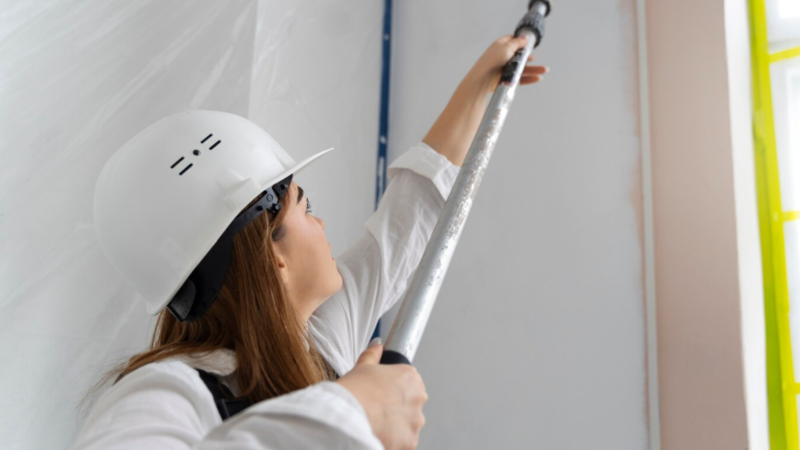
Healthy and safe work environments are created when a commercial interior painting project ensures that ventilation is well-controlled. Plenty of building owners fail to see that airflow has such a huge impact on paint quality, worker comfort, indoor air safety, and the end results of the project. The air movement in the space decides whether the painting drying process is fast, the workers’ comfort level is high, and the facility can reopen for business in a very short time. We discuss the reasons below as to why ventilation should be treated as a major consideration in the planning of any commercial painting project.
Why Proper Ventilation Matters During Interior Commercial Painting?
Enhancing Worker Safety and Reducing Exposure Risks
The safety of employees should supplant all concerns during commercial painting projects of the interiors, especially in places where painters work in commercial painting in Richmond, VA, or in any other crowded urban area that is crowded. The paint materials that are used inside the rooms that are closed tend to give off fumes that can build up very fast. There are some coatings that are considered low-VOC and even odorless, but still they release compounds, which, if the airflow is not free to circulate, irritate the eyes, skin, and respiratory tracts. Good ventilation is not only a means of getting rid of the fumes by making them weaker, but also taking them away from the area where the painters are working with their careful and time-consuming techniques. So, it is safer for them.
The steady airflow can also help a lot in diminishing the headaches, fatigue, dizziness, and irritation symptoms that are often encountered by painters in small areas. Sometimes even require them to take breaks or move slowly, thus prolonging the project and missing the deadline. Conversely, Airflow brings to the commercial properties that rely on the punctual delivery of the projects not only comfort but also a continuous and well-organized production flow and scheduling.
Improving Paint Application Quality and Long-Term Durability
Air circulation directly affects paint adhesion and overall coating quality. The drying and curing process is hampered by an increase in humidity caused by poor ventilation. It can cause the adhesion to be weak, and the problem can subsequently escalate to uneven surfaces, sticky spots, or even the very early peeling off of the paint film. In industrial setups where the walls, trims, and hallways receive a lot of foot traffic and are cleaned frequently, the durability factor must be considered over a long period of time.
Air circulation is definitely the number one factor for controlling moisture, better curing, and getting a clean and smooth finish. Moreover, it also diminishes the amount of dust particles that could settle on the wet paint and thus prolongs the process of forming unwanted spots or rough areas on the interior surfaces.This routine is highly significant in places such as reception, office, retail, and meeting rooms, where the appearance is a decisive factor in customer impression. The same airflow is a very important part of preserving the shiny surface, and at the same time, it does away with the need for early repainting or touch-ups.
Supporting Faster Project Completion and Reduced Downtime
Renovations frequently suffer delays their ripple effects are felt in the normal operation of the business, and the provision of services to the staff, tenants, or guests will be affected. Good air circulation increases the rate at which paint dries, and this in turn allows the crew to put additional layers earlier and hence complete the task within the period given. If there is no airflow, the drying of the paint will be uneven, and this will lead to rework, slow progress, or even rescheduling of the painter.
This advantage is tremendously significant for hospitals, restaurants, retail outlets, and corporate offices that can’t afford to be closed for a long time. Quick drying also implies that the smell of the paint will not be there, and the area will be comfortable for re-entry, even for the early birds. If there is a proper ventilation system, the project manager can act safely, thereby minimizing the period of no activity and allowing business operations to restart even earlier.
Enhancing Indoor Air Quality for Occupants Returning After Completion
Even when the last layer has dried, ventilation still plays an important role. Everyone in the building is affected by the quality of indoor air, that is, members of staff, visitors, clients, and also the residents. The poor air circulation not only allows the smells and dust to stay in the atmosphere even after the painters have left quite a long time ago, but also becomes the reason for discomfort or unpleasantness in the atmosphere. The proper air circulation, on the other hand, removes the fumes in no time and, therefore, makes indoor air quality safe and comfortable.
In hospitals, schools, shopping malls, and office buildings, which are continuously running facilities, the proper ventilation has a big impact on making the indoor air fresher and cleaner. The better the quality of air, the more positive the impression of the property. Thus, the occupants feel cleaner and more comfortable, and the future renovation planning reflects the value.
The ventilation system is still an essential requirement in the indoor commercial painting projects since it has a direct impact on the safety, efficiency, air quality, and longevity of the final results. Good ventilation encourages the workers, gets the coatings dried properly, and at the same time, reduces the time for the business to be closed. It is more than a technical method, being rather a main point that affects the whole painting process from prep work to final inspection. With strategic airflow management, commercial interiors achieve smoother finishes, faster completion times, and healthier indoor environments, making ventilation a key component of successful painting execution. See more blogs.