It used to be that only big name fashion brands and industrial printing companies were the ones to look for when it came to custom clothing. These days, with the right tools, little known artists are actually capable as well of producing all sorts of items ranging from custom t-shirts, tote bags, uniforms to gifts. Getting a 15 needle embroidery machine, a Manual Heat Press, and some sublimation paper will each offer you different ways of customizing your fabric. Collectively, with these tools you’ll be enabled to do almost anything from a nicely stitched company logo to a multicolored artwork printed on fabric. Learning, however, how each of these work will not only let you develop new products but also give you the opportunity to evolve the customers’ familiar style.
Discover More Opportunities With Decorative Techniques
Every way to adorn apparel has its own particular benefit. For example, if you’re looking at giving fabric a raised stitching with a texture you might go with embroidery. For transferring images to any surface of a suitable material heat transferring method is your solution. Sublimation printing, on the other hand, is a perfect way for making artwork in very vivid colors that actually become a part of the fabric or item being printed if the material is a suitable one.
Determine the Merits of a 15 Needle Embroidery Machine
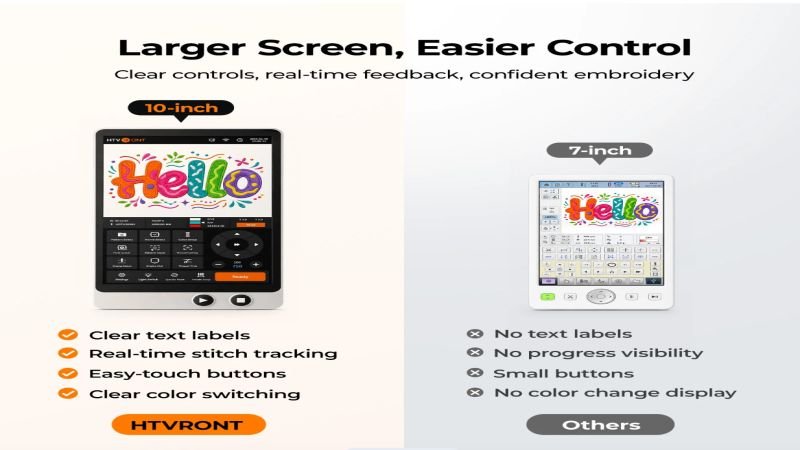
A 15 needle embroidery machine basically means that the artist has an extra option if she or he is to work with designs using several different thread colors. Having several needles you can preset different thread colors so that during stitching there will be a fewer occasions you need to switch the thread manually from one to another. This can help significantly shorten the manufacturing period required for intricate logos as well as intricate design stitches including names or even branded garments.
Manufacture Intricately Designed Items of Multiple Thread Colors
Color is an integral part of embroidery. A business logo, for example, may have several corporate brand colors. A decorative design might consist of multiple shades. A custom name with an outline may also require different colors for the different parts. When several needles are set up beforehand, it is much easier to switch thread colors during stitching. In addition, making a number of similar items can benefit from faster work with multiple needles as well.
Understand Which Products Respond Well to Sublimation
Saving your sublimation work from going to waste means selecting the right substrates, which for fabric sublimation generally include white or very pale colors of polyester fabric and other items that have a specialized coating. This procedure is quite different from the standard way of printing that is being done using ink directly onto cotton. For regular cotton shirts and t-shirts you will be getting no polyester surface in fact which is required for the majority of sublimation works, your final prints either may result in a poor-quality print or may not even come off well. So, before buying the blank products, see if they have any sublimation feature. That’s one of the most critical things that will enable you to create the nice and vibrant prints that you are really looking for.
Make Use of a Printer and Ink Capable of Doing Sublimation Work
Only with the correct combination of equipment and consumables will you be able to achieve sublimation printing. The printer must be capable of firing sublimation ink, and the ink also must be suitable for the paper and for the material that you have to put your print onto. The use of the wrong sublimation ink is sure to bring very faint color and probably very poor image or even no image at all.
Create Customer Satisfaction With Transparent Communication
Getting a custom design is usually accompanied with some sort of personal details like a name, birthday, logo, color preference, etc. Therefore, make sure these details are verified and clear at the customer’s side as soon as possible before production. If a customer’s fabric or decoration style doesn’t quite fit, be honest about the suitable options so customer gets a clear result from their order.
Conclusion
Beside a 15-needle embroidery machine, a Manual Heat Press, and sublimation paper, a variety of different custom apparel and personalized products can be made if there are the right machines. Embroidery machine gives very detailed stitchwork, and heat pressing is good for placing the right transfers, whereas sublimation printing is the way to create vibrant design on any color. There are different specifications and requirements for each, for that you should select the suitable materials and adjust properly the right settings of machines. You can achieve the creative concept as the end product that will surely satisfy customers by the proper preparations and constant checking of quality from time to time.
FAQs
1. For what purpose is a 15 needled embroidery machine suitable?
It is a machine you can use for making stitched drawings (i.e., logos, lettering, pattern work, etc.) and decorations. A multinedle arrangement is also a way to have colors mixed into the stitches so that you don’t have to prepare different thread colors separately. Therefore, multicolor embroidery becomes easier and faster especially when one has multiple needles on hand.
2. Is a 15 needles embroidered machine a small business friendly machine?
The small clothes business that is always making custom clothing, uniforms, caps, branded products, or things like that may get good benefits from the embroidery machine that they will not get from the regular machine. However, whether such a machine is good or not for a particular business is dependent on a number of factors such as the number of orders, the amount of space, and of course, the money that they have invested.
3. What is a Manual Heat Press good for?
This Manual Heat Press can be used for a wide range of garment and material surface designs. A heat-resistant design or transfer sheet is usually required for heat presses to transfer these designs onto fabrics or garments. The Manual Heat Press basically does this by the application of appropriate levels of heat and pressure. See more.